Random NFL Team Picker: How to Draw a Team Fairly
Randomly assigning teams sounds trivial until you have to do it for a group and someone questions the result. The methods people reach for by default — pulling names from a hat, going round the room, letting someone "just pick" — all have failure modes that produce arguments.
Here's what each situation actually needs.
The Common Situations
Office pool or sweepstake. Everyone gets a team, winner determined by that team's performance. Needs to be visibly fair because money is often involved.
Fantasy draft order. Assigning pick positions rather than teams. The first pick has real value, so the method has to be beyond dispute.
Survivor pool assignments. Some formats assign starting teams randomly.
Picking a team to support. A person with no allegiance wanting one assigned, usually for fun.
Kids picking teams for a game. Playground or backyard, where the goal is nobody feeling picked last.
Deciding who watches which game, or which game goes on which screen.
Making It Genuinely Fair
Three properties matter, and most casual methods fail at least one:
1. Nobody can influence the outcome. If the person drawing can feel the folded papers, or knows which envelope is which, the draw isn't clean — even if they're honest.
2. Everyone can verify it afterward. A draw people watched happen is trusted. A draw someone did privately and reported is not, regardless of the truth.
3. It's reproducible in principle. If challenged, you can explain exactly what happened and why it was fair.
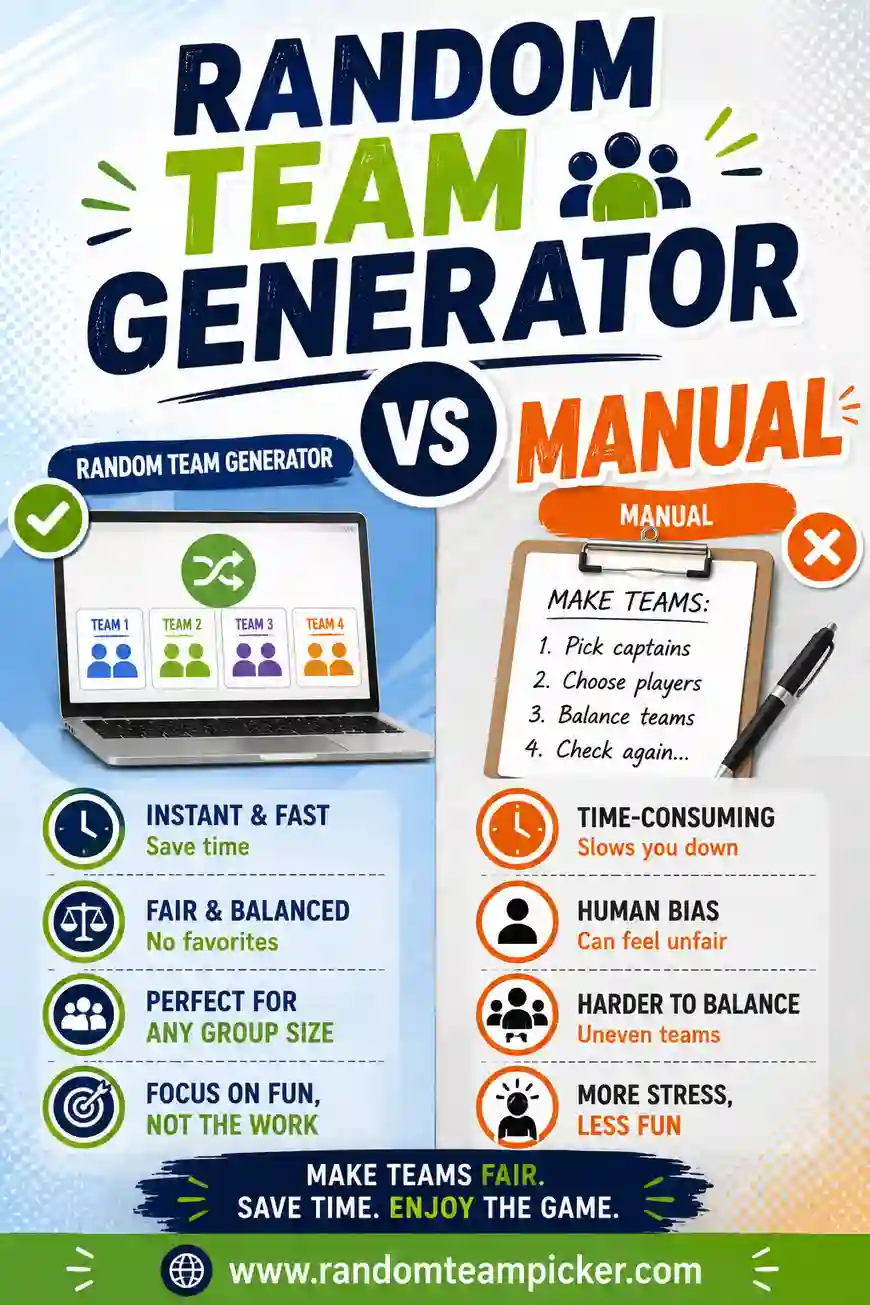
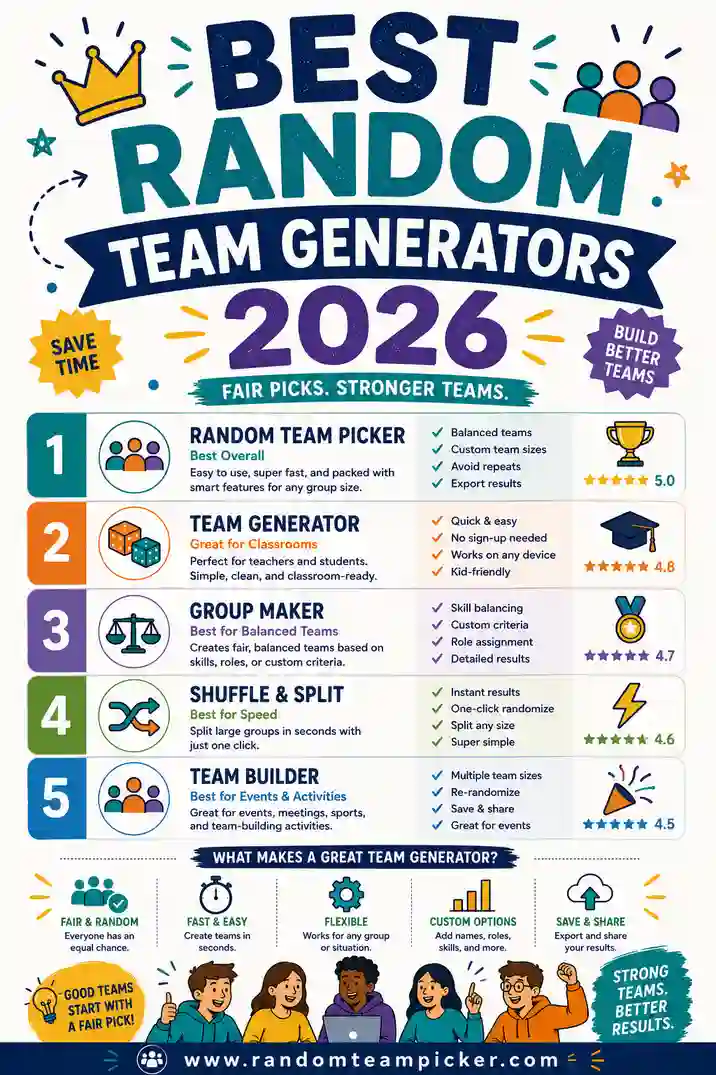
A random team picker covers all three — the process is visible, nobody handles the outcome, and the method is the same for everyone.
Physical Methods That Work
If you'd rather do it in the room:
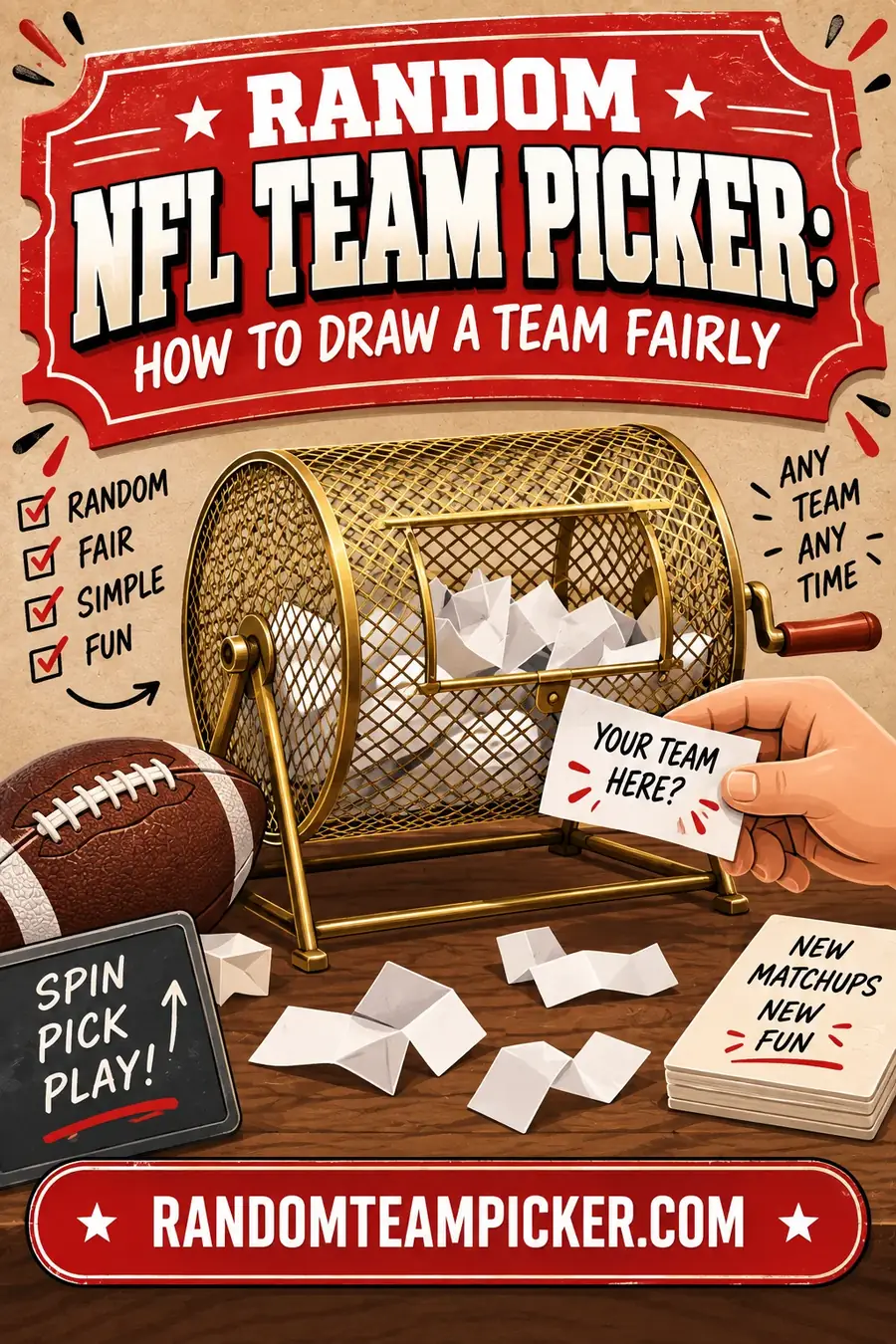
Identical folded slips in an opaque container. Same paper, same fold, container you can't see into. Have someone other than the organizer draw, in front of everyone.
Numbered cards face down. Shuffle in view, deal in order. Simple and transparent.
Playing cards for draft order. Everyone draws one; highest card picks first. Fast and self-evidently fair.
Dice for small groups. Works up to six cleanly. Beyond that you need re-rolls for ties, which gets tedious.
Physical Methods That Cause Arguments
Someone reading names off a list "randomly." Human-generated randomness isn't random, and everyone knows it.
Drawing from a bag where slips are different sizes. Folded paper of varying thickness is genuinely distinguishable by touch.
The organizer drawing their own team last. Even when scrupulously honest, whatever they end up with looks arranged. Have the organizer draw first, or have someone else run the draw entirely.
Assigning by seniority, arrival order or seniority-with-a-random-flavor. Not random, and the people who benefit rarely notice while everyone else does.
For Office Pools Specifically
A few things that prevent the common problems:
Draw after everyone has paid in, not before. Otherwise someone who draws badly quietly withdraws.
Draw all 32 teams even if you have fewer people, then distribute extras evenly. Otherwise the question of which teams were excluded becomes the argument.
Do it in one sitting with witnesses. A draw spread over a week as people become available invites doubt.
Post the results immediately somewhere everyone can see. Memory of a verbal announcement diverges within days.
Decide the tie and refund rules before drawing, not after. What happens if someone leaves the company mid-season, or if two people want to swap? Agreeing in advance prevents a dispute later.
Fantasy Draft Order
This is the highest-stakes version, since the first pick has genuine value.
Do it live with everyone present, in person or on a call. Draft order determined offline is the single most common source of league friction.
Use a method with a visible process. A randomizer that shows the shuffle, cards dealt in view, or a live draw — anything where people watch the result being produced.
Consider a two-stage draw for larger leagues: randomize the order in which people draw, then have them draw positions. Slower, and it removes any question about who was assigned what by whom.
Record it. A screenshot or a photo settles everything permanently.
Picking a Team to Support
Different problem entirely — here there's no fairness concern, just a decision. Some people prefer a random assignment precisely because it removes the pressure of choosing.
Worth knowing: a randomly assigned team you then follow for a season tends to stick better than one chosen by researching which is best. The arbitrariness is part of what makes it feel like yours.
If the random result is genuinely unappealing, a common house rule is one re-roll, then you keep what you get — which preserves most of the randomness while avoiding a result nobody wants.
For Kids
Randomize the assignment, not the picking. Traditional captain-picks-players is the format that leaves someone last, which is the thing worth avoiding. A random draw assigns everyone at once with no ranking implied.
Draw teams, not people. Assign each child to a team by draw rather than having teams select children.
Let a child run the draw. It removes any suspicion of adult arrangement and they enjoy it.
Running a Full Office Pool
The team draw is one step in a process, and the surrounding decisions cause more disputes than the draw itself.
Set the rules in writing before anyone pays in. Entry cost, prize split, what happens if someone leaves the company, whether trades or swaps are allowed, and how ties are settled. Five minutes of writing prevents every argument that follows.
Collect money first, draw second. Otherwise someone who draws badly quietly withdraws, and you're left short.
Draw all 32 teams even with fewer participants. Distribute the extras evenly and announce how before the draw. Otherwise which teams were excluded becomes the argument.
Do it in one sitting, with witnesses. A draw conducted piecemeal over a week as people become available invites doubt, however honestly it was run.
Post the results immediately. A shared document or a photo of the list. Verbal announcements diverge in memory within days.
Name a decision-maker for disputes in advance. Not to rule against anyone, but so there's a process rather than a debate.
Decide the tiebreak. Most pools use total points, point differential, or a coin flip. Any is fine; deciding after the fact is not.
Fantasy Draft Order in Detail
The highest-stakes randomization in most leagues, since the first pick carries genuine value.
Do it live. In person or on a call, with everyone present. Draft order determined offline and announced afterward is the single most common source of friction in a league, even when the process was completely fair.
Use a visible method. A randomizer that shows the shuffle, cards dealt face-up, a live draw from a container. People need to watch the result being produced, not be told about it.
Consider a two-stage draw in larger leagues: first randomize the order in which people draw, then have them draw their pick positions. Slower, and it removes any question of who assigned what.
Record it. A screenshot or a photo, posted to the league chat immediately. Settles everything permanently.
Do it well before the draft, not minutes prior. People want time to prepare for their slot, and a rushed order announcement adds stress to an already busy moment.
Consider compensating the last pick. Some leagues give the final slot an extra waiver priority or a small draft-budget bonus. Not necessary, and it does reduce grumbling.
Other Draws Worth Randomizing
The same principles apply well beyond team assignment.
Secret Santa or gift exchange. The classic case where a visible, verifiable draw matters — and where the organizer drawing last always looks arranged.
Chore or duty rotas. A random assignment removes the argument about fairness, provided it's genuinely random and seen to be.
Speaking or presentation order. Nobody wants to go first or last, so a draw removes the awkward volunteering.
Prize draws and raffles. Where money or value is involved, verifiability is the whole thing.
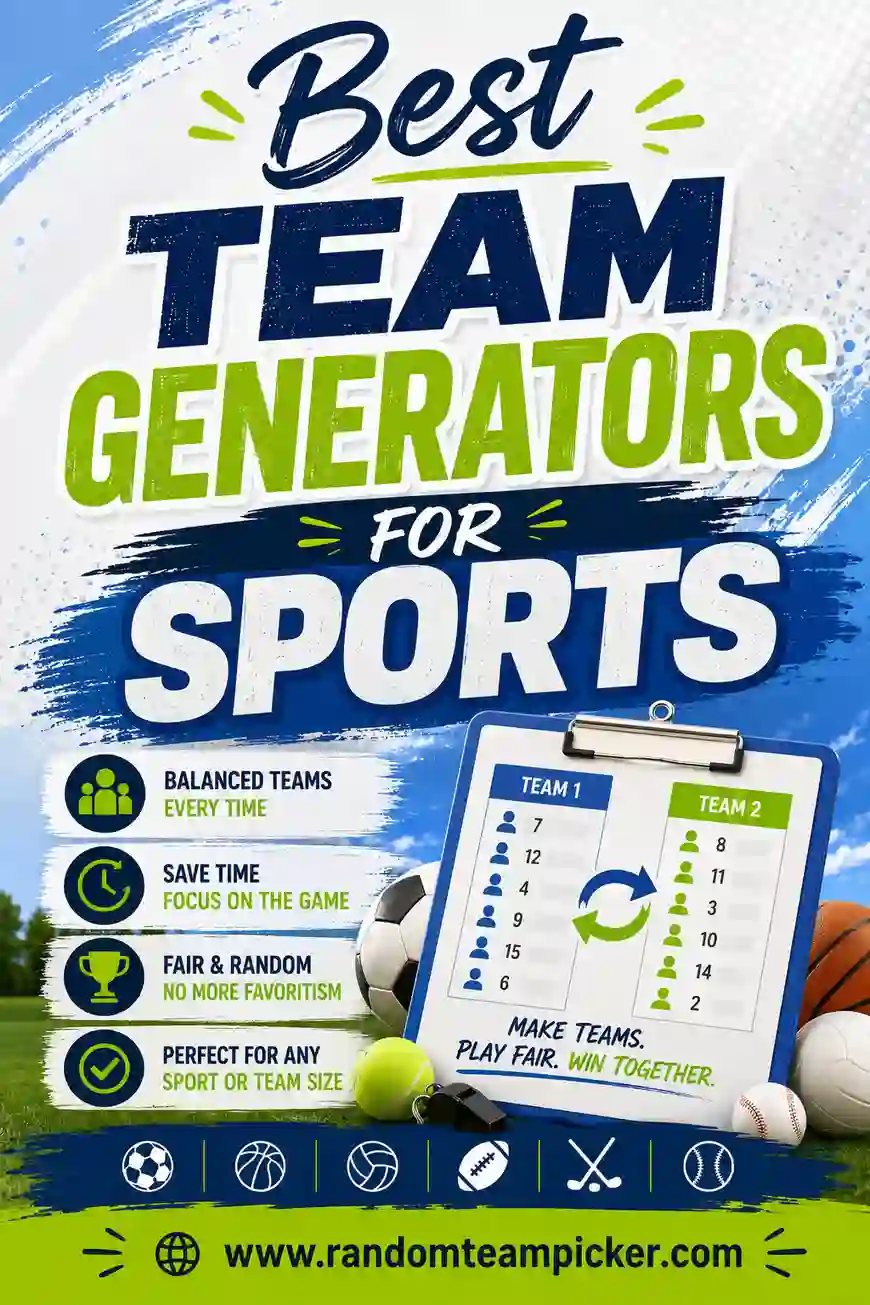
Team selection for a casual game. Randomizing who's on which team avoids the captain-picks format that leaves someone last.
Seat or room allocation. Anywhere some options are better than others, a draw beats a first-come rule.
Task assignment on a project. Where several jobs are equally necessary and unequally appealing.
In every case the requirements are identical: nobody can influence the outcome, everyone can verify it afterwards, and the process can be explained if challenged.
Randomness People Trust
Worth understanding, because perceived fairness and actual fairness are different problems.
Visible process beats stated fairness. A draw people watched is trusted; a draw someone conducted privately and reported is not, regardless of the truth. If you can only optimize one thing, optimize visibility.
Physical randomizers feel fairer than digital ones, even when a digital one is more genuinely random. Cards, dice and drawn slips carry an intuitive credibility that a screen doesn't. If a group is skeptical, the physical version costs nothing.
Uneven results look rigged. If one person draws three good outcomes in a row, people will suspect the method rather than accept the coincidence. Nothing to be done about it, but it helps to have explained the process beforehand rather than defending it afterwards.
Removing the organizer from the draw removes most doubt. Either have someone else run it, or draw your own outcome first.
For Kids and Casual Games
The playground problem is worth addressing directly, since it's where random selection matters most and is used least.
Captain-picks-players is the format that leaves someone last. Everyone remembers being picked last, and the format guarantees that someone is, publicly, every single time. It's an entirely avoidable experience.
Random assignment removes the ranking. Draw names into teams rather than having teams select names. Nobody is chosen last because nobody is chosen at all — the draw does it.
Let a child run the draw. Removes any suspicion of adult arrangement, and they enjoy the job.
Draw into teams, not in sequence. Pulling names alternately into two piles is faster and feels more balanced than drawing a full team then the remainder.
Rebalance openly if needed. If a random draw produces two obviously mismatched teams, swapping two players openly and with agreement is better than pretending the draw was fine. State the reason.
Do it out of sight of the game. Assigning teams before arriving at the pitch removes the standing-around period where the social dynamics play out.
Common Mistakes
The organizer drawing last. Whatever they end up with looks arranged, even when it wasn't.
Different-sized slips in a bag. Genuinely distinguishable by touch, which quietly undermines the whole draw.
Drawing before collecting entry money. Someone who draws badly withdraws, and the pool is short.
No record of the result. Memory diverges within days, and there's nothing to refer back to.
"I'll just randomly pick." Human-generated randomness isn't random, and everyone in the room knows it.
Not deciding the rules first. What happens on a tie, a withdrawal or a swap request. Deciding after the situation arises is how a friendly pool becomes an argument.
When You Just Need to Pick a Random NFL Team
Most of the time the request is simpler than a full draw: one person, one team, right now.
The reasons people pick a random NFL team are consistent — settling on a franchise to follow after moving to a new city, assigning a team for a survivor pool or a season-long bet, choosing a squad in a video game, or handing a kid a team to root for so they have someone to watch on Sunday. In every one of those cases the only real requirement is that the outcome was not steered, and that everyone present can see it was not.
Three ways to choose a random NFL team that hold up:
- A generator. Fastest, and the only method that is genuinely uniform across all 32 without any setup. Any decent random football team selector should also let you exclude teams, which matters when a draw is being repeated for several people.
- Numbered slips, drawn blind. Slow but transparent — the standard when money is involved.
- A 32-sided result from dice. Two ten-sided dice, re-rolling anything over 32. Fun, and defensible.
What to avoid: picking "off the top of your head." Human choices cluster hard on the same six or seven famous franchises.
Other Leagues: Basketball, Baseball, and Beyond
The same draw works across sports, with small differences in how the leagues are shaped.
Basketball. People pick a random NBA team for fantasy assignments, League Pass challenges, and video-game franchise runs. Thirty teams, split evenly into two conferences of fifteen, which makes conference-balanced draws easy: split the pool first, then draw the same number from each side.
Baseball. Thirty clubs again, but the structure matters more here. If you pick a random MLB team for a season-long pool, whether you want division balance is worth deciding up front, since six divisions of five split cleanly and a straight random draw will not.
Hockey and soccer. Thirty-two NHL clubs, and soccer leagues that vary by country and by season because of promotion and relegation. For any league that changes size, check the current list before you build a draw — a selector working from last season's twenty clubs will quietly exclude the promoted sides.
The principle across all of them is the same: define the pool explicitly, in writing, before anybody draws. Almost every argument about a random draw turns out to be an argument about who was in the pool.
Frequently Asked Questions
What's the fairest way to assign NFL teams for an office pool? A draw with a visible process, run by someone other than the organizer, with all participants present and results posted immediately. The three requirements are that nobody can influence the result, everyone can verify it, and the method can be explained if challenged.
How should a fantasy league decide draft order? Live, with everyone present, using a method where the randomization is visible. Draft order decided offline and announced afterward is the most common source of disputes in a league, even when the process was genuinely fair.
Should the organizer draw first or last in a pool? First, or not at all — have someone else run the draw entirely. An organizer drawing last always looks arranged regardless of the truth, and that appearance is what causes the argument.
Is drawing folded papers from a hat actually random? Only if the slips are identical in size, paper and fold, and the container is opaque. Differently folded slips are genuinely distinguishable by touch, which quietly undermines the whole draw.