How to Make Random Groups Without Bias
To make random groups without bias, use a true randomizer instead of picking by hand: paste your names into a random group generator, choose your number of groups, and let it shuffle. A tool has no favorites, no memory of who's popular, and no habit of clustering friends, so every split is genuinely fair. Manual methods like counting off can work too, but they're easier to game and let unconscious bias creep in. The gold standard is a shuffle nobody can influence.
Ready to make a fair split? Open the free group generator, drop in your names, set the number of groups, and shuffle. No sign-up, no favorites, just even groups.
What "Bias" Really Means in Grouping
Bias in grouping is any pattern that makes the split unfair, whether you mean it or not. It shows up in two flavors.
Conscious bias is deliberate: putting your two best friends together, keeping the strong players on one side, or quietly separating people you'd rather not mix. Most of us know when we're doing this.
Unconscious bias is sneakier. You group the confident kids together without thinking, or you always seem to pair the same people because they sit near each other. You're not trying to be unfair, but the result is.
Both undermine trust. The moment a group senses the split wasn't fair, the "that's rigged" comments start and the goodwill evaporates. Removing bias isn't just about fairness on paper, it's about the group believing it was fair.
Why True Randomness Beats Manual Methods
The most reliable way to strip bias out is to hand the decision to something that can't have a preference. A randomizer doesn't know who's popular, who's skilled, or who sits where. It just shuffles.
Here's why a tool beats doing it by hand:
- No memory. It won't remember that Sam and Alex are best friends and "accidentally" pair them.
- No pattern. Humans fall into habits. A good shuffle produces a fresh, unpredictable result every time.
- No pressure. When someone's watching you assign groups, it's hard not to soften things. A tool feels no social pressure.
- It's provable. You can shuffle in front of the group, so everyone sees the randomness happen.
That last point matters more than people expect. Fairness you can demonstrate beats fairness you just claim.
How to Make Truly Random Groups in 4 Steps
Here's the whole unbiased process, start to finish.
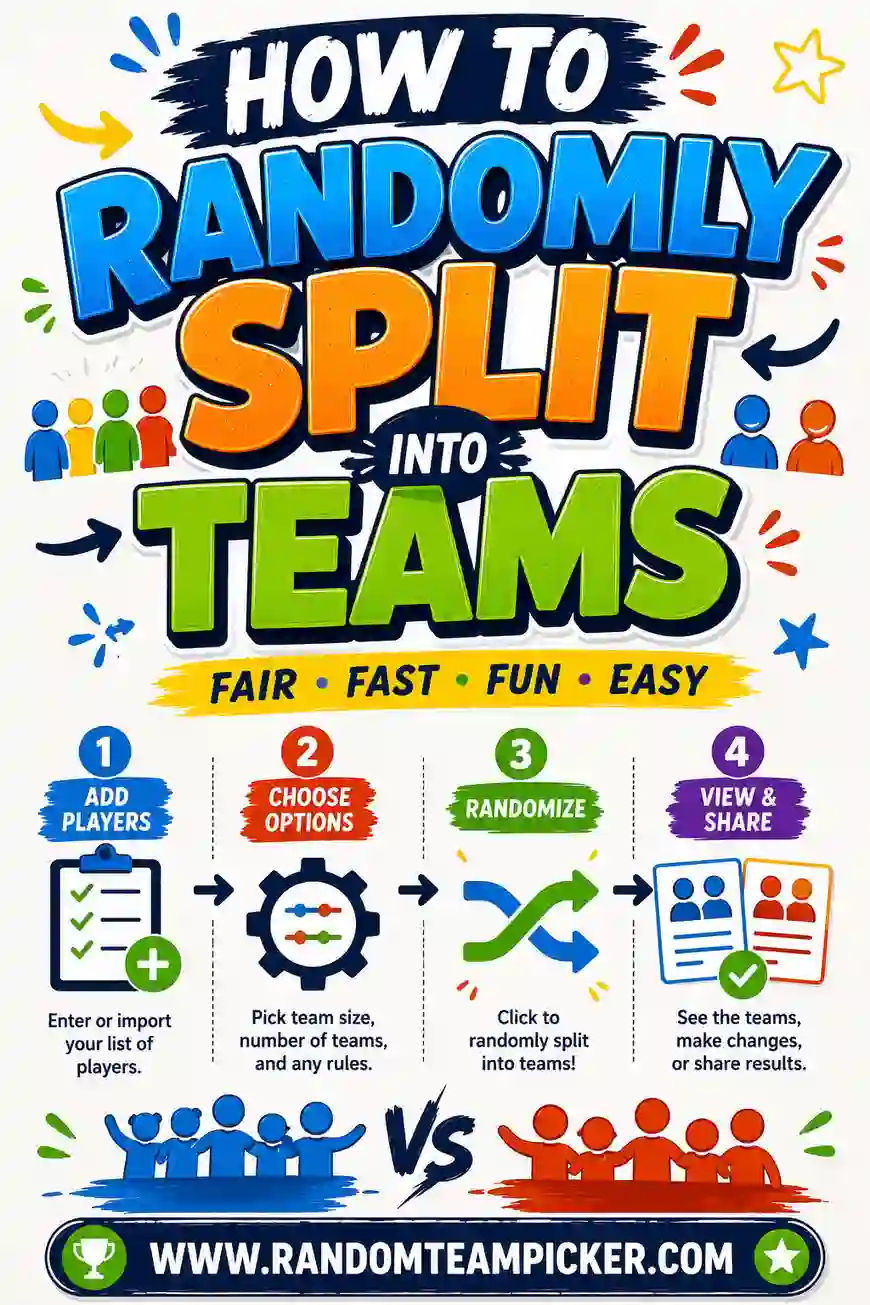
- Gather every name. Include everyone who should be grouped, in no particular order. Don't pre-sort, that's where bias sneaks in.
- Choose your split. Decide on a number of groups or a group size. Set this before you see the result so you can't nudge it.
- Shuffle with a tool. Let a random group generator do the work. One click, done.
- Announce the result as-is. Read out what the shuffle gave you. Resist the urge to "fix" it, because fixing is where bias returns.
The key discipline is step four. If you reshuffle only when you don't like the outcome, you've reintroduced your preference. Reshuffle for a genuine reason (a lopsided size, say), not because you wanted a different mix.
The "commit before you shuffle" rule
The best safeguard against bias is to lock in your settings before you run the shuffle. Decide the number of groups, decide the rules for uneven splits, then shuffle once and go with it. When you commit up front, there's no room for your preferences to sway the result after the fact.
Manual Methods That Stay Fair (and Their Limits)
No device handy? Some low-tech methods are reasonably unbiased, as long as you use them honestly.
Counting off
Everyone counts "1, 2, 3, 1, 2, 3…" around the room and groups by their number. It's quick and mostly fair. The catch: people can swap seats beforehand to land with a friend, so watch for maneuvering.
Drawing names or numbers
Write names on slips, mix them in a bag, and draw them into piles. Genuinely random and hard to fake. The downsides are prep time and the temptation to peek.
Sorting by a neutral trait
Group by birthday month, or the last digit of a phone number. These are unbiased if the trait has nothing to do with who you'd want together, but they can produce uneven group sizes.
Alphabetical, then chop
Not truly random, but it's neutral and transparent, no one can accuse you of favoritism. Just know it groups the same people every time, which gets stale.
Manual methods can be fair, but every one has a loophole a determined person can exploit. A tool closes those loopholes, which is why it's the safer default when fairness really matters.
Handling Uneven Groups Without Playing Favorites
Real groups rarely divide evenly, and how you handle the leftovers is a place bias loves to hide. Decide your rule in advance and apply it the same way every time.
| Situation | Fair rule |
|---|---|
| One or two extra people | Spread them across existing groups, one each |
| Need equal sizes exactly | Add a neutral role (timekeeper, scorer) to the odd person |
| Someone arrives late | Slot them into the smallest group automatically |
| Someone leaves | Merge their spot into the nearest group |
The point is consistency. If you always add extras to the smallest groups, no one can claim you engineered the sizes to help a friend. A generator applies these rules automatically, which removes even the appearance of favoritism.
Extra Tips for Groups That Feel Fair
Being fair and seeming fair are two different wins, and you want both.
Shuffle in the open. Let the group watch the randomize button do its thing. Visible randomness silences most complaints before they start.
Say the rules out loud first. "Four groups, extras go to the smallest, one shuffle, that's final." When everyone knows the rules up front, the outcome feels legitimate.
Reshuffle for everyone or no one. If you re-run the shuffle, do it because a rule requires it, not because one person didn't like their group.
Rotate often. Fresh groups each session prove you're not locking anyone into a "bad" spot. It also keeps things interesting.
Don't over-explain a fair result. If the shuffle was genuinely random, you don't owe anyone a justification. Overexplaining can make a fair split look suspicious.
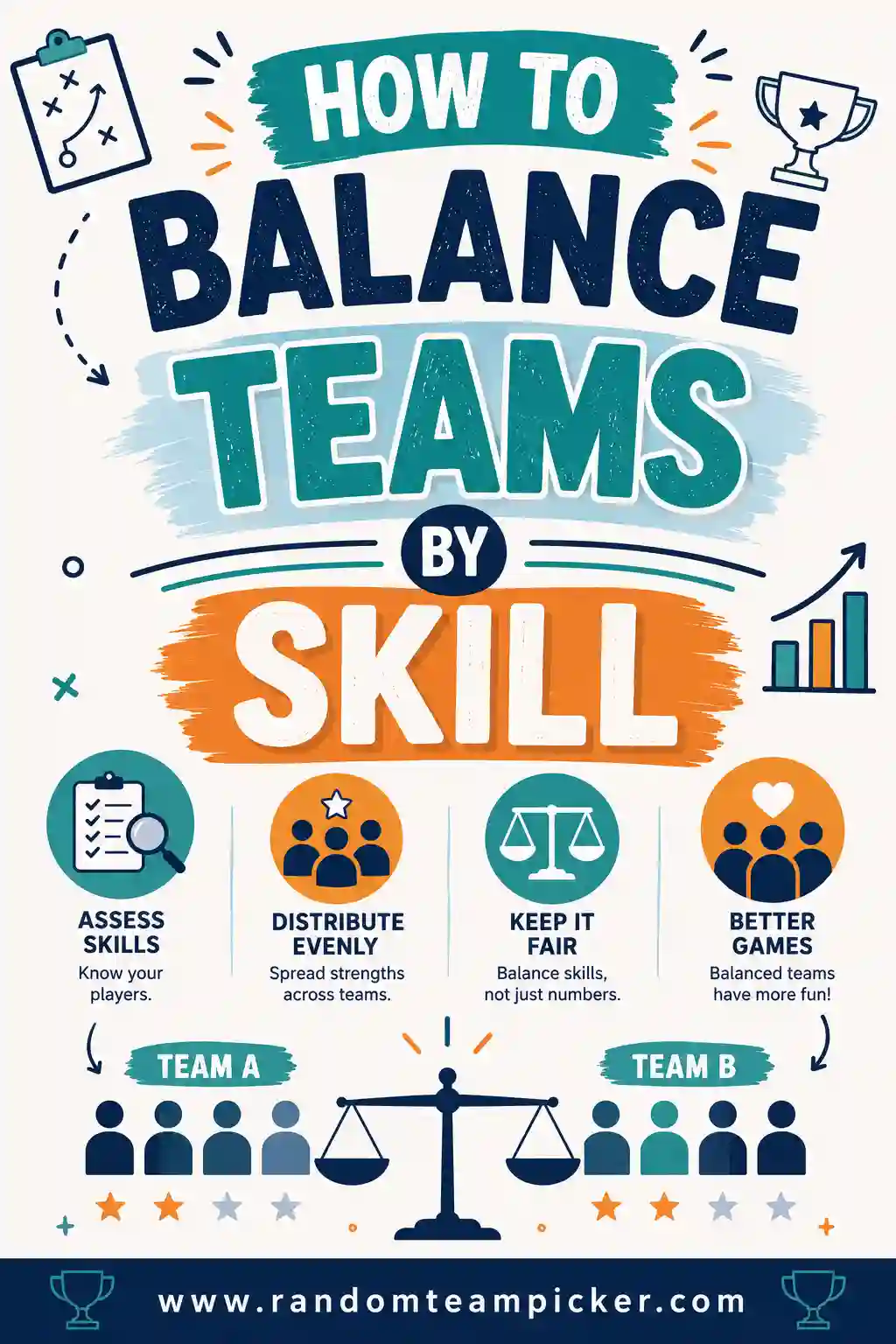
If your goal is even skill rather than just even numbers, that's a slightly different task, our guide on how to balance teams by skill covers it.
When You Might Want Less Randomness
Full randomness is the fairest default, but a few situations call for a light, transparent thumb on the scale, and that's okay as long as you're upfront about it.
- Separating known conflicts. If two people genuinely can't work together, splitting them on purpose is sensible, just be open that you did.
- Skill balancing for competition. Even competitive games sometimes need deliberate balancing so the match stays close. See our best ways to pick teams guide.
- Accessibility needs. Pairing a student with a needed support is fair, not biased. Fairness means everyone gets what they need, not identical treatment.
The rule of thumb: if you're deviating from pure randomness, say so and explain why. Hidden adjustments feel like bias; open ones feel like good judgment.
How Randomizers Actually Stay Fair
It helps to understand why a good tool is unbiased, so you can trust it and explain it to a skeptical group. A proper randomizer uses a shuffling method that gives every possible arrangement an equal chance, the same principle behind fairly dealing a deck of cards.
The classic technique is called a Fisher-Yates shuffle. In plain terms, it walks through the list and, for each name, swaps it with a randomly chosen one further along. Do that all the way through and you get a genuinely scrambled order where no name is more likely to land in any spot than another. Split that shuffled list into groups and every grouping is equally likely.
What matters for you is the result: there's no hidden weighting, no preference, and no pattern from one shuffle to the next. The tool can't "prefer" a name because it doesn't know anything about the people, just the text. That's exactly what makes it more trustworthy than a human, who inevitably carries opinions into the room.
Spotting a fair tool from a rigged one
A trustworthy group generator has a few tells:
- Different result each time. Run it twice on the same list and you should get different groups. Identical results every time is a red flag.
- No account or profile needed. A tool that doesn't know who you are can't play favorites.
- Visible shuffle. You can watch it randomize, so there's nothing hidden.
- Handles any list. It treats a list of ten names exactly like a list of a hundred, with no special cases.
Building a Culture of Fairness
Beyond any single split, the real win is a group that expects fairness. When people trust that grouping is always done squarely, they stop second-guessing and just get on with the activity. That trust is built over time, through consistent habits.
- Use the same method every time. Predictable fairness beats a different approach each session. When people know the drill, they relax.
- Never make exceptions quietly. If you ever adjust a group, say so out loud. One hidden favor can undo months of goodwill.
- Invite them to watch. Letting anyone see the shuffle, or even press the button, turns fairness from a promise into a demonstration.
- Rotate constantly. The more groups change, the clearer it is that no one is being stuck or favored on purpose.
Do this consistently and complaints about grouping simply fade away. People stop looking for bias because they've learned there isn't any.
Frequently Asked Questions
What is the best way to make random groups without bias?
Use a true random group generator. Paste your names, set the number of groups, and shuffle. A tool has no favorites and no habits, so it removes both conscious and unconscious bias in one click.
Is counting off a fair way to make groups?
Mostly, but not fully. Counting off is quick and reasonably random, but people can position themselves beforehand to land with friends. A randomizer closes that loophole and is harder to game.
How do I prove to a group that the split was fair?
Shuffle in front of them. When people see the randomize button produce the groups live, they accept the result as fair. State the rules out loud first so the whole process is transparent.
What should I do when groups don't divide evenly?
Set a rule in advance and apply it every time, like adding extra people to the smallest groups. Consistency is what keeps it unbiased. A generator handles uneven splits automatically.
Can I reshuffle if I don't like the result?
Only for a genuine reason, like an uneven size, and reshuffle the whole thing, not just the part you dislike. Re-running the shuffle just to get a mix you prefer quietly reintroduces your bias.
Are random groups always the fairest choice?
Almost always, but not for every case. Separating people in genuine conflict or balancing skill for competition can call for small, open adjustments. As long as you're transparent about any tweak, it stays fair.
Ready to Make Fair, Unbiased Groups?
Making random groups without bias comes down to one habit: hand the decision to a true randomizer and commit to the result. Open the free group generator, paste your names, set your groups, and let the shuffle do the deciding, no favorites, no patterns, no arguments. It's free, there's no sign-up, and every split is genuinely fair. Try it and let the randomness speak for itself.