How to Pick Captains Fairly (Every Method)
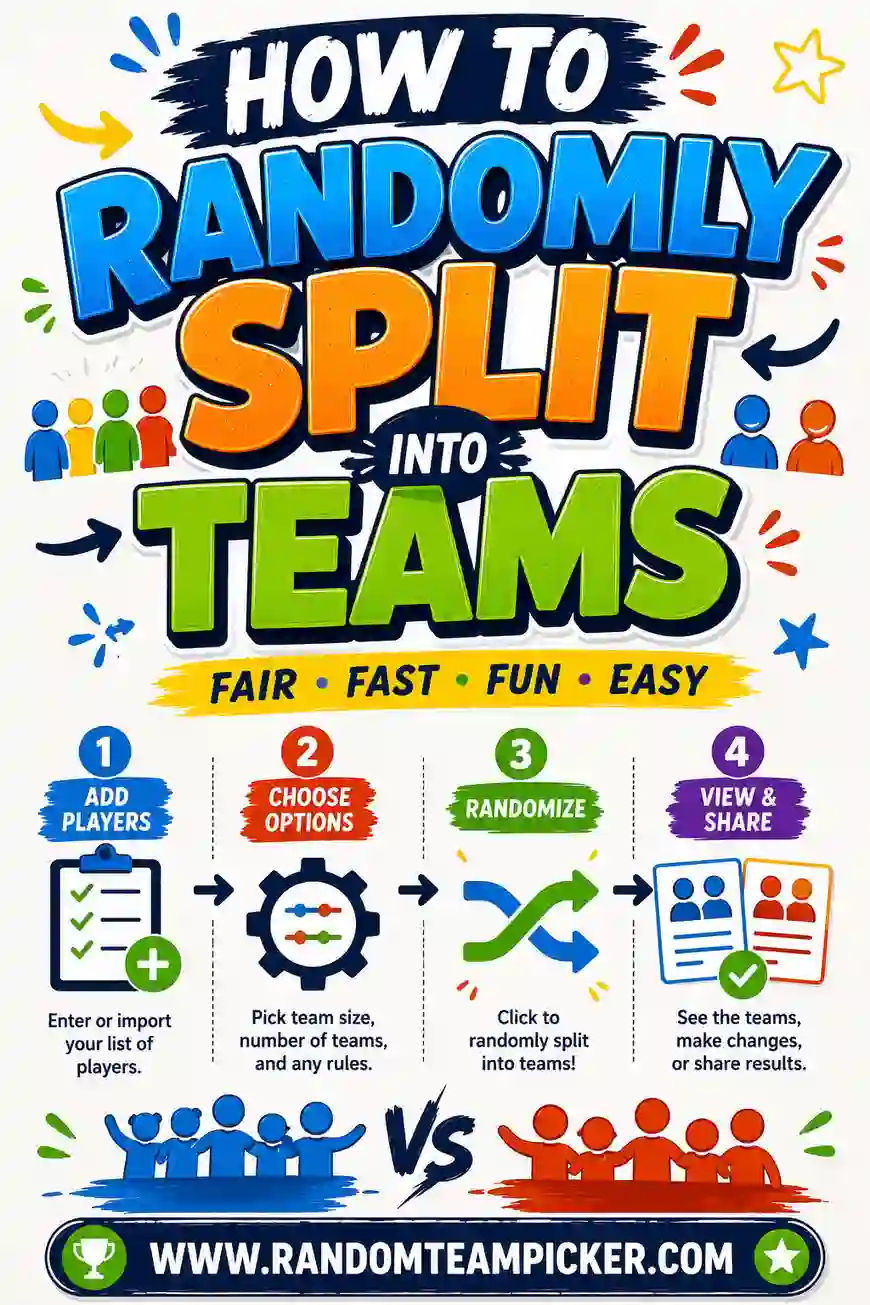
The fairest way to pick captains is a genuinely random draw, so nobody can claim favoritism, followed by having those captains split into balanced teams. Random selection treats everyone equally, ends the "you always pick the same kids" argument, and takes seconds. The easiest way to do it is a free random team picker: drop in your names and let it draw captains or shuffle everyone into fair teams for you.
Want to settle it right now? Open the free picker, paste your list, and pull captain names at random. No arguing, no hurt feelings, no one waiting to get picked last.
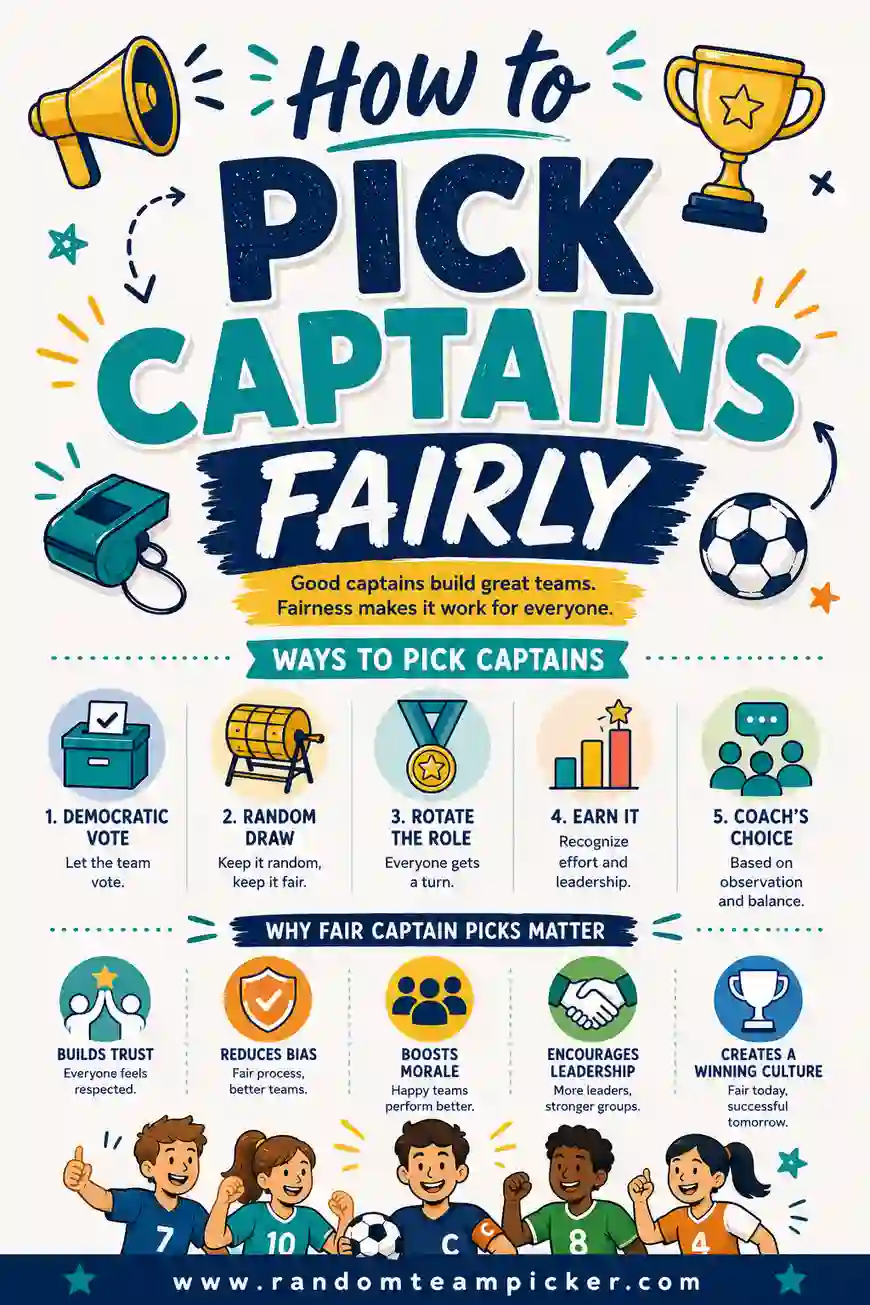
Why "Fair" Matters More Than You Think
Picking captains sounds trivial until you watch it go wrong. The same two athletic kids get tapped every recess. The same manager always "leads." Everyone else quietly learns their place near the bottom of the pecking order, and that sting sticks.
Fair captain selection sends the opposite message: everyone has a real shot. That's true whether it's a gym class, a rec-league team, a trivia night, or a work committee. When the method is obviously neutral, people relax and buy in, because they know the result wasn't rigged.
The classic worst method, by the way, is the old schoolyard "two captains take turns picking players." It publicly ranks kids from most to least wanted. Skip it. The methods below are all kinder and just as quick.
The Fairest Methods to Pick Captains
There's more than one fair way to do this. Here's how the main methods stack up so you can pick the right one for your group.
| Method | How it works | Best for | Fairness |
|---|---|---|---|
| Random draw | Draw names at random | Any group, any time | Highest |
| Rotation | Everyone gets a turn over time | Recurring teams, classes | Very high |
| Vote | Team members vote for a captain | Established teams | Medium–high |
| Merit / seniority | Chosen by skill or experience | Competitive sports | Medium |
| Volunteer | Whoever wants it steps up | Low-stakes casual games | Medium |
Random and rotation are the two you'll reach for most. Let's break each one down.
Random draw (the simplest fair pick)
Put every eligible name in and draw. Done. It's instant, impossible to bias, and works for any size group. A digital team picker does the drawing so there's no "you shuffled the hat" suspicion. This is the default we'd recommend for one-off games and mixed-ability groups.
Rotation (fair over the whole season)
Instead of one random pick, you make sure everyone captains eventually. Keep a simple list and cross off each name as they take a turn. It's the fairest option for teams that meet regularly, because over a season, every single person leads once. Great for classrooms and youth sports.
Voting
Let the team choose. This builds buy-in and often surfaces the natural leader, but it can turn into a popularity contest and leave shy-but-capable people out. Use it for established teams that know each other well.
Merit or seniority
Pick based on skill, experience, or time on the team. Fair in competitive settings where leadership genuinely depends on ability, but it shuts out newcomers. Reserve it for serious, competitive contexts.
Step-by-Step: Pick Captains With a Random Draw
Here's the whole process when you want it fast and unarguable.
- List everyone eligible. Type or paste every name, one per line. Leave out anyone who's opted out.
- Decide how many captains you need. Usually one per team, so if you want four teams, you'll draw four captains.
- Draw at random. Run the list through the picker and pull your captain names. Every run is fresh and unbiased.
- Let captains build teams, or shuffle for them. Captains can alternate picks (privately, off a list) or you can just shuffle the whole roster into balanced teams and skip the picking drama entirely.
- Announce it. Post the captains and the teams. Because it was clearly random, there's nothing to dispute.
A gentler twist on captains picking players
If you do want captains to choose their squads, have them pick from a written list quietly rather than calling names out loud in front of everyone. It keeps the fun of captains without publicly ranking people. Better still, skip the picking and let the tool split everyone into fair teams directly.
Picking Captains for Different Situations
The right method shifts a little depending on where you are.
Gym class and youth sports
Rotation is your friend here. Kids remember whether they ever got to lead. Keep a class list and rotate captains each session so everyone gets a turn across the term. For one-off game days, a quick random draw is perfect.
Rec leagues and adult sports
A random draw at the start of the season, or a quick team vote, both work. Adults care less about the ceremony and more about balanced sides, so consider shuffling everyone into even teams rather than doing a full captain's pick.
Trivia, game nights, and parties
Keep it light. Draw two names at random to captain, shuffle the rest into their teams, and start playing. Nobody wants a ten-minute selection process eating into game time.
Work teams and committees
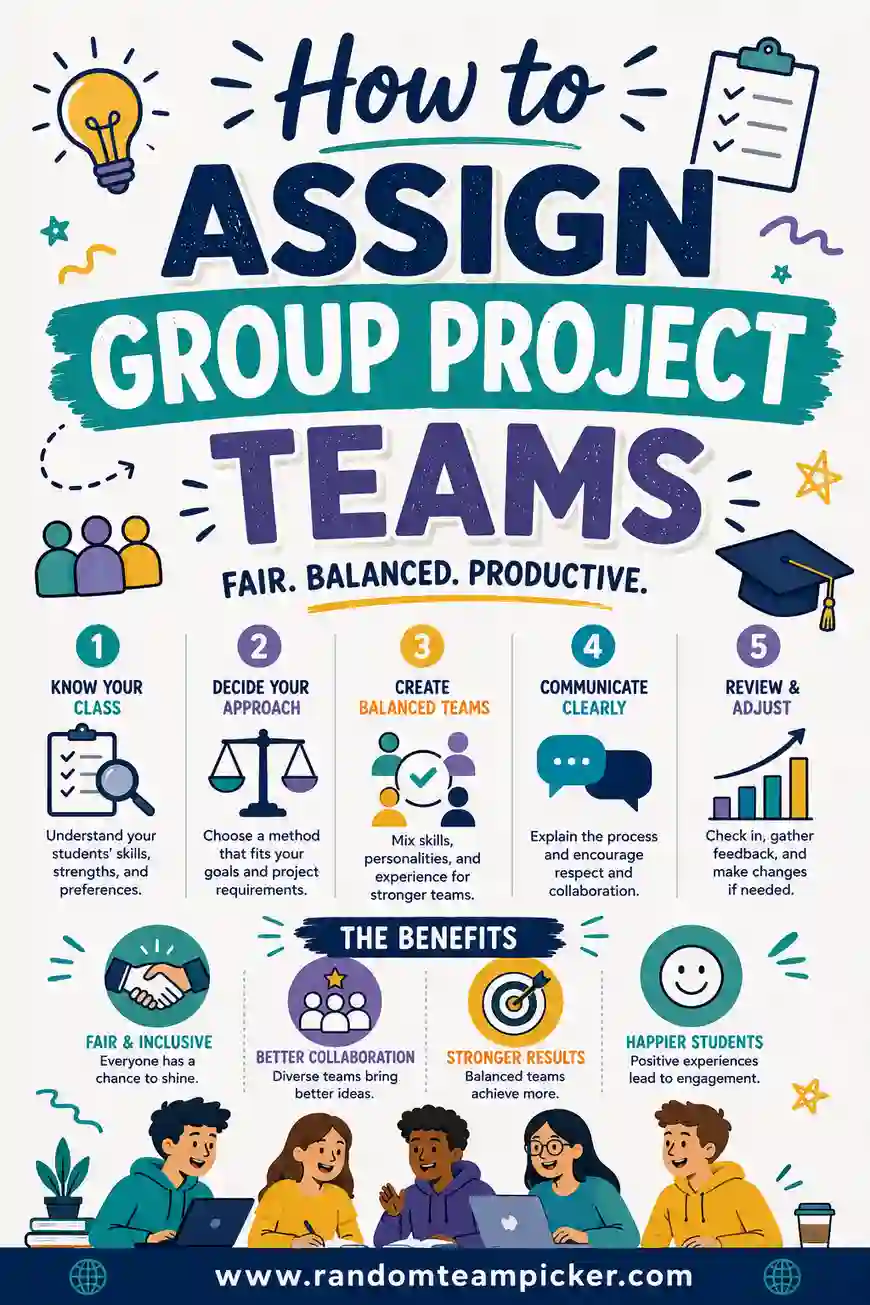
Rotation or a vote fits best. Rotating who leads a project or committee spreads the experience and stops one person from always running the show. For splitting the actual project work, see how to assign group project teams.
What a Good Captain Actually Does
Once you've picked fairly, it helps to be clear about the job so captains aren't just a title.
- Sets the tone. Encourages teammates and keeps the mood positive, especially after a loss.
- Organizes the team. Sorts positions, roles, or the play order.
- Speaks for the group. Talks to the ref, teacher, or organizer on the team's behalf.
- Includes everyone. Makes sure quieter members get a turn and a say.
You don't need your "best" player to be captain. Sometimes the most encouraging person makes the better leader. That's another reason random or rotation works well: it gives unexpected people a chance to shine.
Common Mistakes to Avoid
A few habits quietly make captain selection feel unfair. Watch for these.
- Always picking the same people. The fastest way to make everyone else feel like a benchwarmer. Rotate or randomize.
- The public "pick your players" line-up. It humiliates whoever's chosen last. Retire it for good.
- Rigging a "random" draw. If you re-draw until you get the captain you wanted, it isn't fair anymore. Trust the first result.
- Making captain a permanent title. On recurring teams, hand it around. Permanent captains breed resentment.
- Forgetting to define the role. A captain with no clear job is just a label. Say what you expect.
Making It Feel Fun, Not Clinical
Fair doesn't have to mean boring. A little theater makes the draw a highlight instead of a chore.
- Build suspense. Do a drumroll before the picker reveals the captain.
- Let the draw decide sides too. After captains are picked, shuffle everyone else into their teams live so the whole thing feels like one fun reveal.
- Rotate with a "captain's badge." A cheap ribbon or hat that passes to each new captain makes rotation feel special.
The goal is for people to enjoy the moment and trust it. Do both and captain selection stops being a source of friction and becomes part of the fun.
Handling Reluctant and Eager Captains
Not everyone wants the job, and some want it too much. Both are easy to manage.
The reluctant captain. If a shy player gets drawn and looks anxious, offer a co-captain to share the load, or let them swap the leadership role for a different responsibility like scorekeeper. Never force someone into the spotlight. The point of fair selection is inclusion, not pressure.
The player who always wants it. One person angling to captain every time is exactly why rotation exists. A visible rotation list makes it obvious that everyone gets a turn, which gently closes the door on lobbying. When it's someone else's turn, the list settles it for you, no debate required.
Ties and re-draws. If two people really want a single captain slot, don't negotiate; draw between just the two of them. A coin flip or a quick random pull is faster and fairer than talking it out, and both sides accept the result because chance decided it.
A note on co-captains
For larger teams, two captains can work better than one. Split the duties: one handles organization and logistics, the other keeps morale up. Draw both at random, and you spread the leadership load while keeping the selection completely fair.
Frequently Asked Questions
What is the fairest way to pick team captains?
A random draw is the fairest single method because it treats everyone equally and can't be biased. For teams that meet regularly, rotation, where everyone captains at some point, is even fairer over time since no one is left out.
How do I pick captains without hurting feelings?
Avoid the public "captains pick players out loud" method, which ranks people in front of the group. Instead, draw captain names at random, or shuffle everyone straight into balanced teams so no one experiences being chosen last.
Should the best player always be captain?
No. A good captain encourages teammates, organizes the group, and includes everyone. That's often not the most skilled player. Random selection and rotation are great because they let unexpected, capable leaders get a turn.
How many captains should I pick?
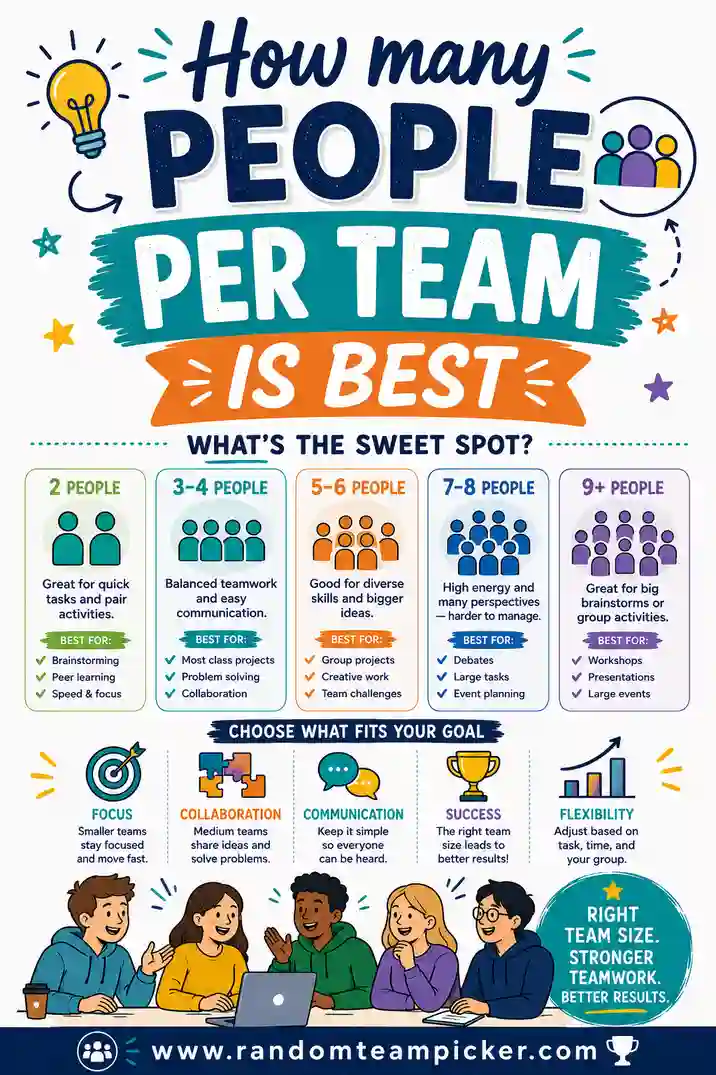
Usually one per team. If you're making four teams, draw four captains. For very large teams you might add a co-captain to share the workload, but one is standard.
Can I pick captains and make the teams at the same time?
Yes. A random team picker can draw captain names and split the rest of your roster into balanced teams in one go, so you skip the slow back-and-forth picking entirely.
How do I keep captain selection fair over a whole season?
Use rotation. Keep a list of everyone and cross off each name as they take a turn as captain. By season's end, every person will have led at least once, which is the fairest possible outcome.
Ready to Pick Captains the Fair Way?
Stop the same two people from always leading. Open the free random team picker, paste your list, and draw captains at random, or shuffle everyone into balanced teams in one click. It's free, there's no sign-up, and every draw is truly random, so nobody can call it rigged.
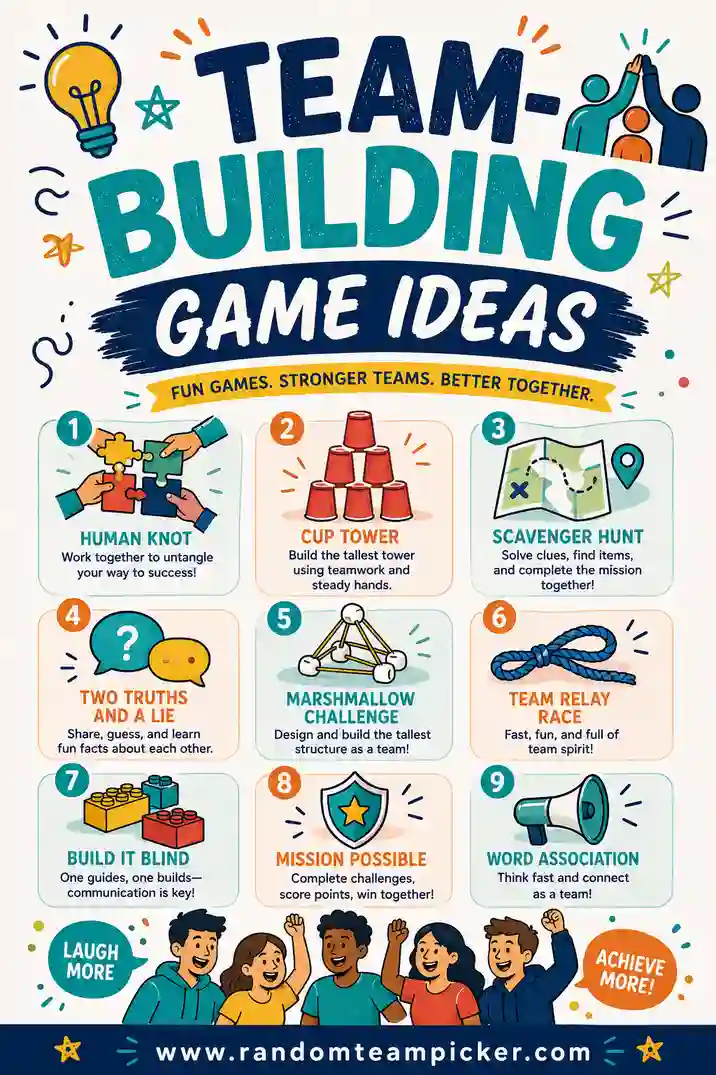
Want to sort the rest of the setup too? Check out how to assign group project teams, how many people per team is best, and some team-building game ideas to run once your captains are set.