Team-Building Game Ideas (Fun for Any Group)
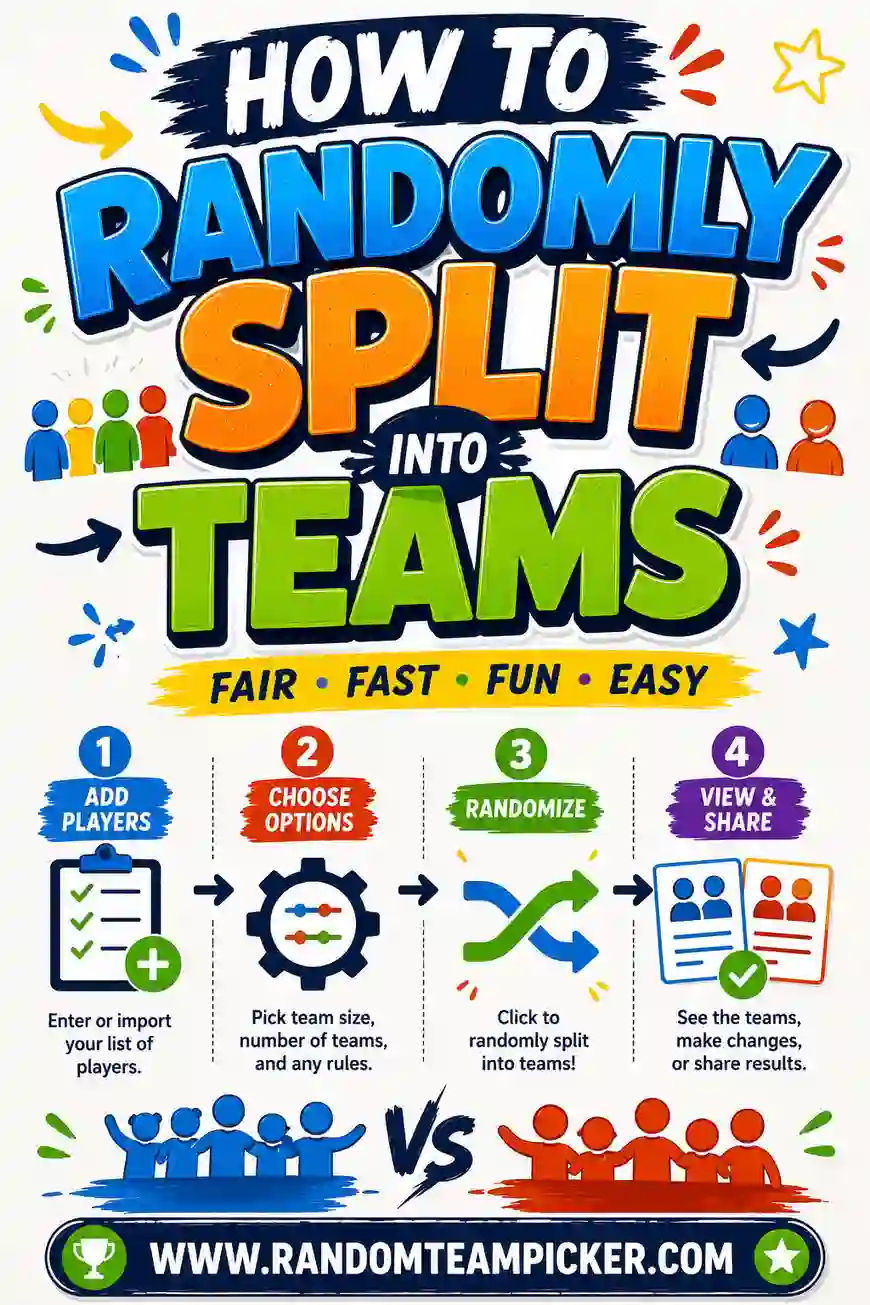
The best team-building game ideas mix people up, spark a little friendly competition, and get everyone talking within minutes. Whether you're running a class, an office offsite, or a party, the trick is fast setup and fair teams, so nobody feels left out before the fun even starts. The quickest way to form those teams is a free random team picker: paste your names, pick the number of teams, and start playing.
Want to jump in? Open the free team picker, split your group into fair random teams, and grab any of the games below. No sign-up, no prep, no awkward "you go with them" moment.
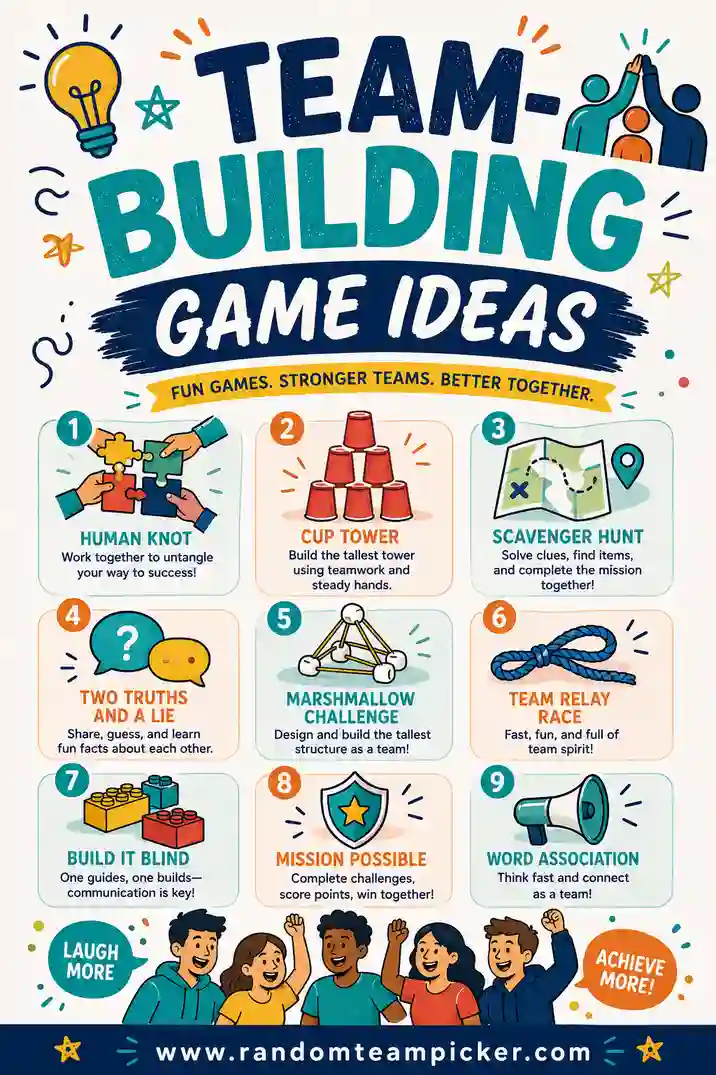
Why Team Games Start With Fair Teams
A team-building game is only as good as the teams playing it. If the same friends always clump together, the game reinforces the cliques you were trying to break. Random teams do the opposite: they throw people together who don't usually interact, which is exactly where the "building" in team-building happens.
Fair teams also keep the competition honest. Nobody wants to play when one side is obviously stacked. A quick random shuffle balances things out and, just as importantly, feels balanced, so everyone plays with a clean slate.
So before the games below, take ten seconds to split your group with the team picker. Then let the fun begin.
Quick Icebreaker Games (5–10 Minutes)
Perfect for the first few minutes, when people are still warming up. These need almost no setup.
Two Truths and a Lie
Each person shares three statements about themselves; two true, one false. The team guesses the lie. It's a classic because it works: people learn surprising things about each other fast.
Human Knot
Everyone stands in a circle, grabs two different hands across the group, then untangles without letting go. Silly, physical, and a genuine lesson in communication.
Speed Introductions
Split into pairs, give each pair sixty seconds to learn three things about each other, then everyone introduces their partner to the group. Great for a room full of strangers.
Would You Rather
Fire off quick "would you rather" questions and have people move to one side of the room based on their answer. Instant energy and easy laughs.
Games for Small Groups (Under 15 People)
When the group is small enough for everyone to be involved at once, these shine.
- Scavenger hunt. Give each team a list of items to find or photos to take. First team back with everything wins. Works indoors, outdoors, or around an office.
- Build a tower. Hand each team spaghetti, tape, and a marshmallow. Tallest freestanding tower after 15 minutes wins. Pure teamwork under pressure.
- Pictionary or charades. Split into two teams and take turns drawing or acting out prompts. Reliable, low-cost, and always fun.
- The story chain. Each team builds a story one sentence at a time, going around the circle. The results are usually hilarious.
Small-group tip
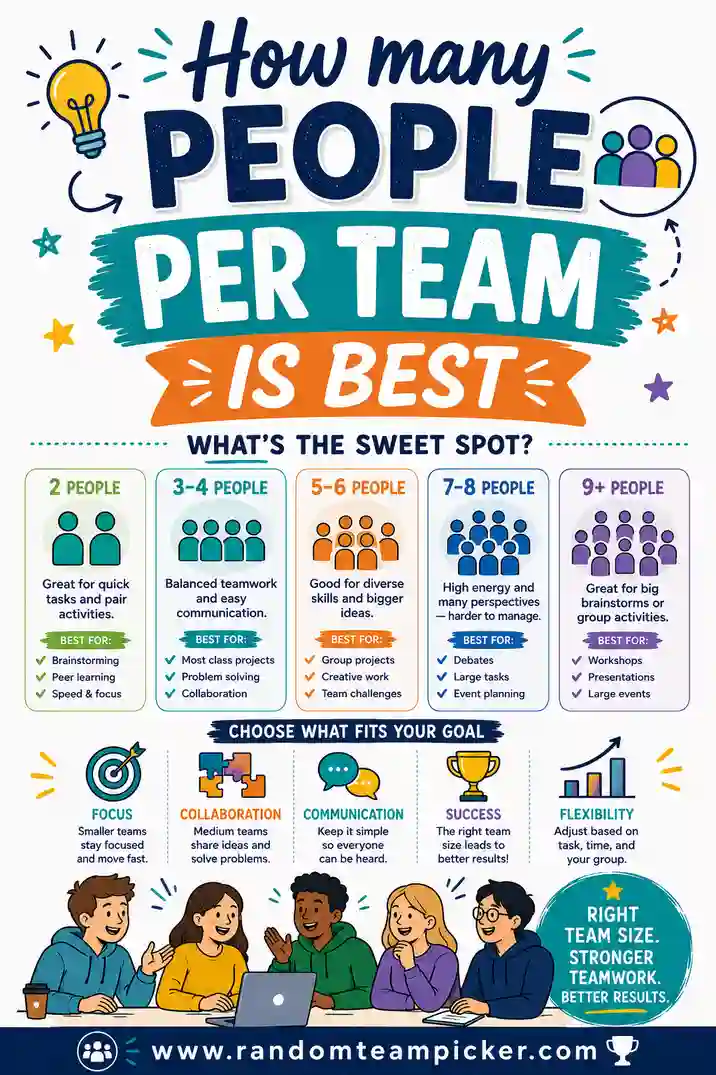
With small groups, aim for two to three players per team so everyone's hands-on. Our guide on how many people per team is best helps you dial in the right size for the game you're running.
Games for Big Groups (15+ People)
Large crowds need games that keep everyone busy at once, not standing around waiting for a turn.
- Trivia tournament. Split into teams of four or five and run themed rounds. Easy to scale to any crowd size.
- Relay races. Physical, fast, and great for a field day or a big offsite. Teams race through a series of silly challenges.
- Team bingo hunt. A "find someone who…" grid where teams race to fill their card by finding people who match each square.
- Minute to Win It. A series of 60-second challenges (stack cups, move cookies from forehead to mouth) with teams competing for points across rounds.
Keeping big groups fair
The more people you have, the more a stacked team stands out. Shuffle everyone with the random team picker so the sides are even. For big groups, decide your team size first, then let the tool tell you how many teams you'll get. It's faster than counting heads.
Game Ideas by Setting
Different rooms call for different games. Here's a quick matchmaker.
| Setting | Best game type | Ideal team size | Time needed |
|---|---|---|---|
| Classroom | Trivia, scavenger hunt | 3–4 | 20–30 min |
| Office / offsite | Tower build, escape challenge | 4–5 | 30–45 min |
| Party | Charades, Minute to Win It | 3–5 | 15–20 min |
| Youth group | Relay races, human knot | 4–6 | 20–30 min |
| Virtual / remote | Online trivia, "guess who" | 3–4 | 20–30 min |
Virtual team-building
Remote teams can play too. Online trivia platforms, a shared "guess whose desk this is" photo game, or a virtual scavenger hunt ("bring back the weirdest thing in your kitchen") all work over video. Split people into breakout rooms using randomly assigned teams so the groups mix.
How to Run a Great Team-Building Session
The games matter, but so does how you run them. A little structure keeps things smooth.
- Set the tone. Keep it light and low-pressure. Make clear that fun beats winning.
- Form fair teams. Shuffle everyone randomly so no group is stacked and no clique dominates. This takes seconds with the team picker.
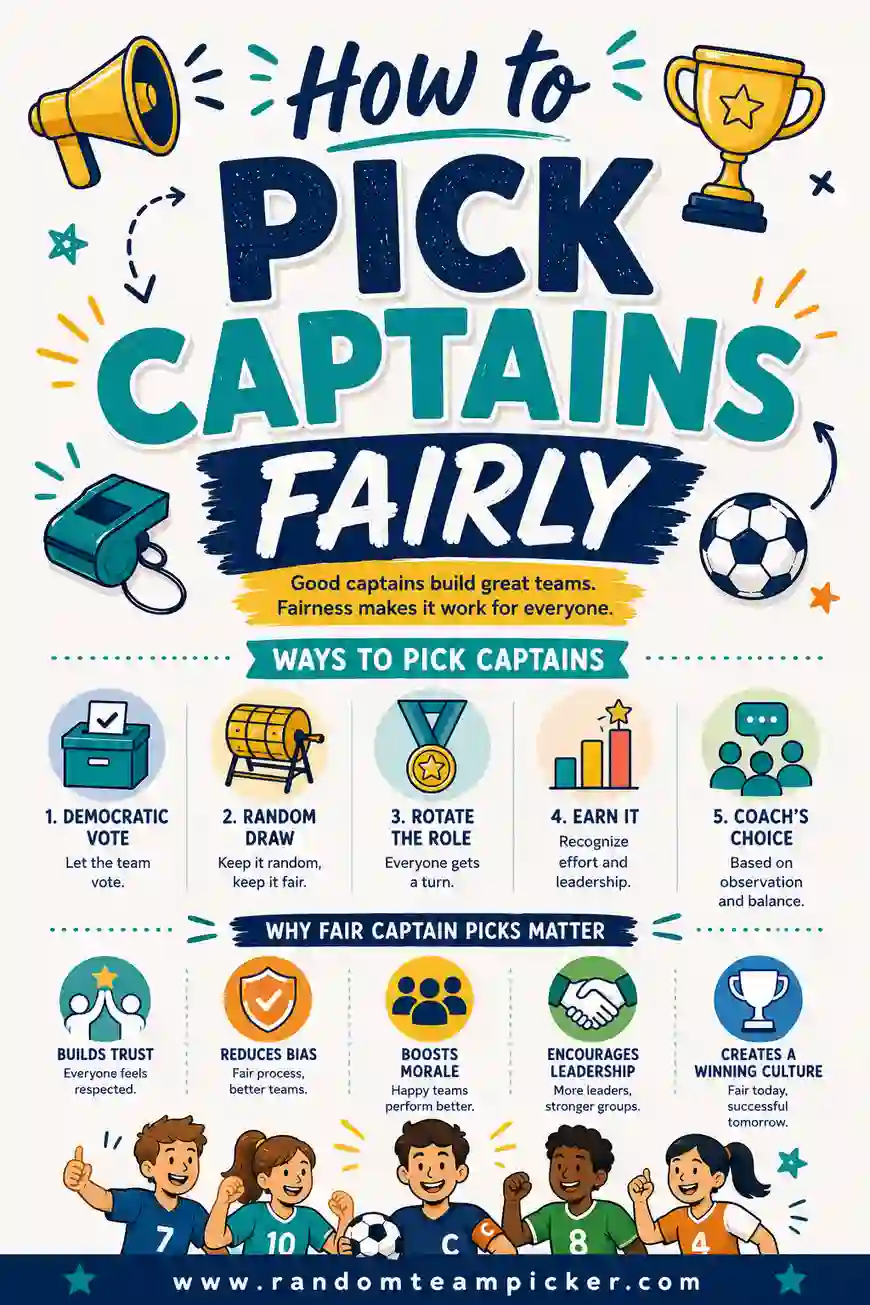
- Pick captains if you need them. Some games run smoother with a team lead. Choose them fairly, see how to pick captains fairly.
- Explain the rules once, clearly. Confusion kills momentum. Say the goal and the win condition up front.
- Keep rounds short. End on a high note rather than dragging a game past its peak.
- Celebrate everyone. A small prize for the winners is fun, but a shout-out for good sportsmanship keeps the mood positive.
Rotate teams between games
Playing several games in a session? Re-shuffle the teams between games so people work with new faces each round. It's one of the best ways to get a whole group to actually mingle, and it takes one click to reshuffle.
Matching the Game to Your Goal
Not every team-building game does the same thing. Pick based on what you actually want out of the session.
- Want people to get to know each other? Lean on icebreakers like Two Truths and a Lie or Speed Introductions.
- Want better communication? Try the Human Knot or a build challenge where teams must plan together.
- Want energy and laughter? Minute to Win It, charades, and relay races deliver.
- Want problem-solving? Escape-room challenges, scavenger hunts, and tower builds force teams to think together.
There's no single "best" game. The best one is the one that fits your group and your goal, run with fair, well-mixed teams.
Prizes and Wrap-Up Ideas
You don't need a big budget to make winners feel good. A few easy options:
- Cheap trophies or ribbons (surprisingly fun for adults too)
- Bragging rights and a photo of the winning team
- First pick of snacks or a small treat
- A silly traveling trophy that the winning team keeps until next time
Wrap up by thanking everyone and, if it fits, doing a quick round of "one thing I learned about a teammate today." It cements the connections the games just built.
Games for Specific Goals and Crowds
Some groups need a game tailored to them. Here are a few reliable picks.
For brand-new teams
When people barely know each other, start low-stakes. "Common Ground" has each team find five things everyone shares in two minutes, then report back. It's non-competitive, gets everyone talking, and surfaces surprising overlaps that carry into later conversations.
For teams that already know each other
Skip the introductions and go straight to a challenge. An escape-room-style puzzle box or a timed build competition pushes familiar teammates to solve problems together under a little pressure, which reveals how they actually cooperate.
For kids and youth groups
Keep it active and simple. Relay races, the human knot, and "categories" (name items in a category before a ball comes back to you) burn energy and keep attention. Rotate teams often so the same kids don't always end up together.
For mixed-age family events
Choose games that don't depend on speed or trivia knowledge, like charades or a photo scavenger hunt. Put a grandparent and a grandchild on the same random team and the game becomes the bridge between them.
Troubleshooting a Session That Stalls
Even good games hit a lull. Quick fixes:
- Energy dropping? Switch to a fast, physical game and shorten the rounds.
- One team dominating? Reshuffle the teams for the next round so the winning group breaks up.
- People not mixing? Assign teams randomly rather than letting friends cluster, and rotate between every game.
- Someone sitting out? Give them a role, scorekeeper, judge, or photographer, so they're still part of it.
A single reshuffle usually resets the whole room's energy.
Frequently Asked Questions
What are the best team-building games for large groups?
Trivia tournaments, relay races, and Minute to Win It scale well because they keep everyone active at once. Split a big crowd into several even teams first with a random team picker so no one stands around waiting and no side is stacked.
How do I make team-building fair for everyone?
Form teams randomly so cliques don't dominate and the sides stay balanced. Pick any captains fairly too, ideally with a random draw or rotation. Fair teams make the whole session feel worth playing.
What are good quick team-building games?
Two Truths and a Lie, the Human Knot, Would You Rather, and Speed Introductions all run in five to ten minutes with no setup. They're perfect icebreakers for the start of a session.
How many people should be on each team?
Three to five is the sweet spot for most games; small enough that everyone participates, big enough for real teamwork. Use smaller teams for hands-on games and larger ones for trivia. See our guide on how many people per team is best for specifics.
What team-building games work for remote teams?
Online trivia, virtual scavenger hunts, and photo-guessing games all work over video. Assign people to random breakout-room teams so the groups mix, then run the game in the breakouts.
Do I need prizes for team-building games?
Not really. Bragging rights, a photo of the winners, or first pick of the snacks work fine. The goal is connection and fun, not the prize. A small, silly reward is plenty.
Ready to Split Your Group and Play?
Pick a game from the list, open the free random team picker, and split everyone into fair, well-mixed teams in seconds. It's free, there's no sign-up, and every shuffle is truly random, so your team-building session starts fair and stays fun.
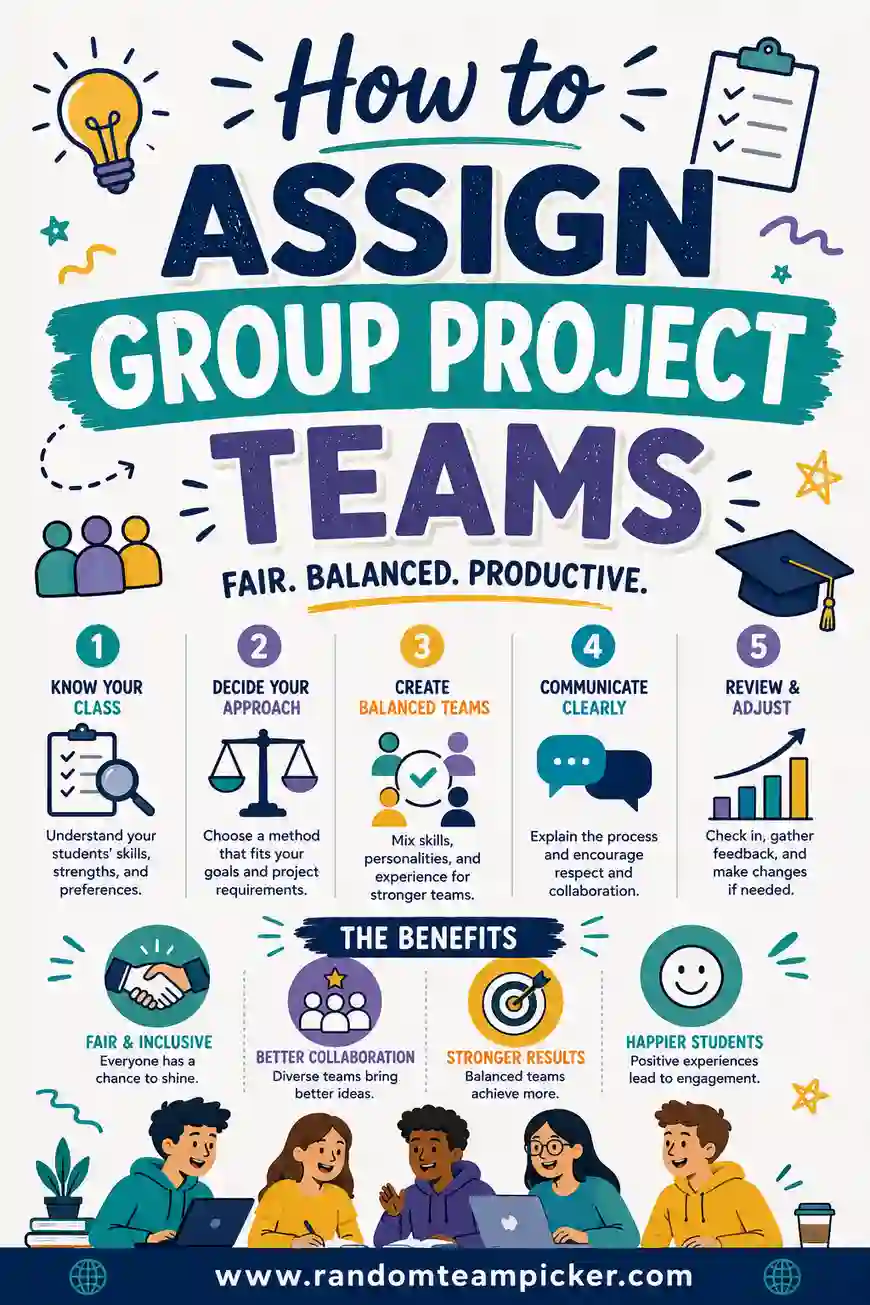
Setting up the rest of your event? See how to assign group project teams, how to pick captains fairly, and how many people per team is best.